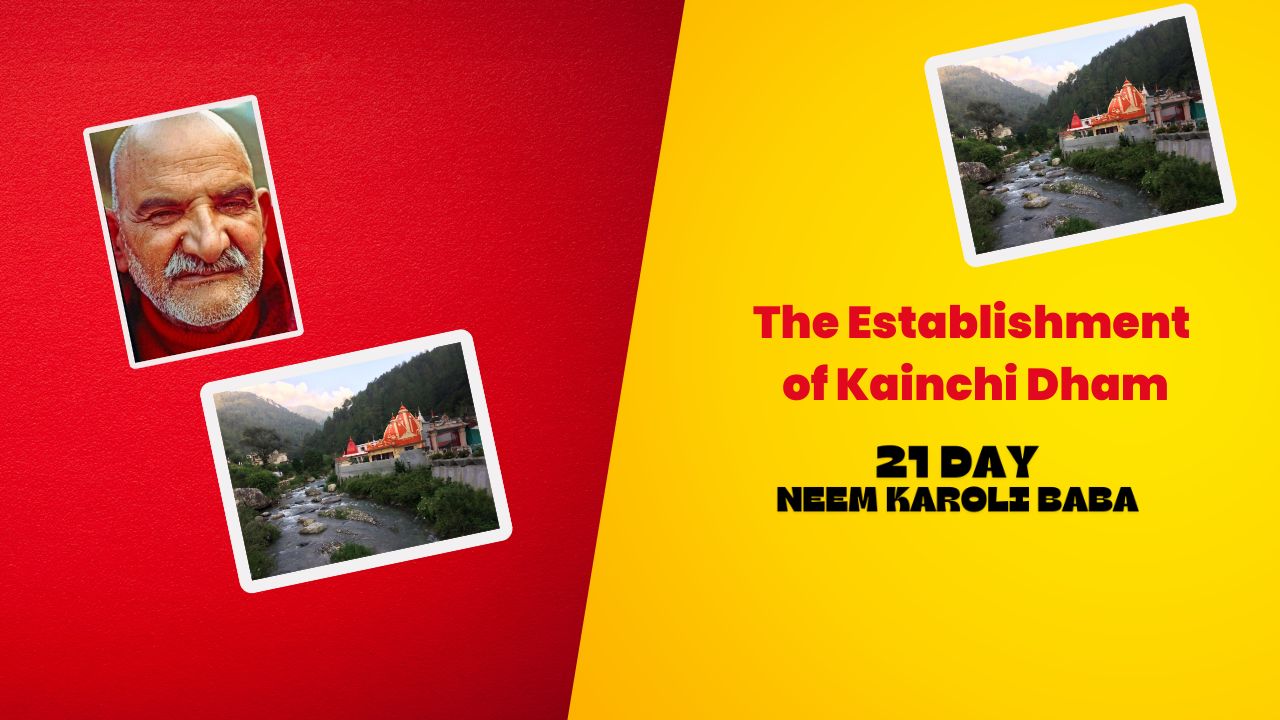

Kainchi Dham In 1964, when Baba Neem Karoli first arrived in Kainchi village, it marked the beginning of a remarkable journey. The news of his arrival spread quickly, and people heard that a revered saint named Neem Karoli Baba had come to Kainchi. At that time, there was neither a temple nor an ashram for Baba to stay in. During the nights, Baba would go to Bhoomiadhar and Hanumangarhi in Nainital for accommodation.
Baba Neem Karoli’s Vision for Kainchi Dham
When Baba Neem Karoli arrived in Kainchi, he expressed a desire to cross the Shipra River and visit a cave on the other side. Crossing the river and reaching the cave was not an easy task, as the area was densely covered with shrubs. One of Baba’s devoted followers, Purnanand Tiwari, took the initiative to clear a path through the thorny bushes. He led Baba to the cave, which was once believed to be the cave of Somwari Maharaj. Upon reaching the cave, Baba Neem Karoli announced that a grand temple dedicated to Hanuman Ji would be built there.
The Construction of Kainchi Dham Temple
The idea of constructing a temple in such a remote and challenging location seemed unimaginable. However, Baba Neem Karoli’s words were enough to inspire his devotees to action. The land where the current Kainchi Dham temple stands was under the jurisdiction of the Forest Department. With remarkable speed, the construction of the temple began. A 4-5 feet wide wooden bridge without railings was built over the Shipra River, right in front of the current temple where prasad is distributed today.
The land for the temple was acquired from the Forest Department, and the construction of a Hanuman temple on such a rugged terrain happened almost miraculously. As long as Baba stays at Kainchi Dham, prasad of pure desi ghee puris and potato chunks are prepared day and night. Sometimes, suji (semolina) and kheer (rice pudding) were also distributed as prasad. On Tuesdays, devotees would bring jalebis or boondi laddoos from Bhowali.
Join Us On Instagram at 21dayneemkarolibaba
Facebook 21day
Why Kainchi Dham Matters to Devotees
Kainchi Dham is more than the place where a temple was built. For devotees, it is the place where Maharaj Ji’s life and teaching took visible form. A remote hillside, a river crossing, and a cave became, through the devotion described above, a home for prayer, for community meals, and for the welcome of strangers. That change, from empty hillside to living ashram, is why the story of the establishment matters so much.
Devotees often say that Kainchi Dham shows what faith and service can build. No one person could have raised a temple in such a place alone. It took the vision described above, the work of followers such as Purnanand Tiwari, the land, the bridge, and the daily offering of food. The story is, in this sense, a story about a community as much as it is a story about a saint.
What Visitors Find at Kainchi Dham
Today, visitors to Kainchi Dham find a place shaped by the values in this story: devotion to Lord Hanuman, hospitality, and Seva. People come for darshan, to sit quietly in prayer, to receive prasad, and to spend time among other devotees. Many visitors describe the atmosphere as calm and welcoming, even on busy days when crowds are large.
The prasad described above is part of that welcome. As the original story tells it, food was prepared day and night, and sweets were brought by devotees on Tuesdays. Sharing food remains a central part of life at the ashram. When you receive prasad, you are taking part in a tradition that goes back to the earliest days of Kainchi Dham, when feeding visitors was itself an act of devotion.
Planning a Visit: A Practical Guide
If you plan to visit Kainchi Dham, a little preparation helps. Kainchi Dham is in the hills of Uttarakhand, near Nainital, and the mountain roads can be narrow and winding. Check local travel arrangements before you go, allow plenty of time for the journey, and be ready for changes in weather, which can be sudden in the hills. Carry water, dress modestly and warmly, and wear footwear that is easy to remove at the temple.
At the ashram, follow the guidance of the people who manage the place. Join queues patiently, keep the premises clean, and avoid loud conversation in prayer areas. Festival days and holidays bring very large crowds, so if you prefer a quieter visit, consider travelling on an ordinary weekday and arriving early. If you are travelling with elderly family members or young children, plan extra time and rest stops. This site also has a guide for travelling to the ashram from Delhi, linked below, which covers routes in more detail.
The Teachings Behind the Place
A visit to Kainchi Dham is not only a journey to a place. For many devotees, it is a reminder of the teachings associated with Maharaj Ji: love and serve everyone, remember God in daily life, and keep devotion simple and sincere. The temple itself began with a simple announcement by a river, and with a follower clearing a path through thorny bushes. That image, of clearing a path so that others can follow, is one that devotees carry home with them.
Three practices help carry that spirit into daily life after a visit. The first is Ram Naam Jap, the repetition of the name of Lord Ram, which devotees use to keep the mind steady. The second is the Hanuman Chalisa, read or sung in devotion to Lord Hanuman, to whom the temple at Kainchi Dham is dedicated. The third is Seva, selfless service, which can be as simple as feeding someone who is hungry or helping a neighbour without expecting anything in return.
Frequently Asked Questions
Where is Kainchi Dham? Kainchi Dham is in the hills of Uttarakhand, near Nainital, in northern India. The ashram sits in a valley setting by a river, which is why the story above speaks of crossing the Shipra River to reach the cave.
When was Kainchi Dham established? As told above, Baba Neem Karoli first arrived in Kainchi village in 1964, and the temple was built in the period that followed. Devotees remember the establishment as a gradual work of vision, labour, and community effort rather than a single day’s event.
What should I keep in mind when visiting? Travel with patience, check local arrangements before you go, follow the rules of the ashram, and be ready for crowds on busy days. Dress modestly, keep the premises clean, and receive prasad with gratitude. If you are unsure about anything, ask the people who manage the ashram.
Do I need to visit Kainchi Dham to follow Maharaj Ji’s teachings? No. A visit can be meaningful for many devotees, but the teachings themselves, love, service, and remembrance of God, can be followed anywhere, through daily practice, kindness, and Seva in ordinary life.
Related Reading
To learn more about Maharaj Ji, read Who is Neem Karoli Baba. For travel guidance, read How to go to Neem Karoli Baba Ashram from delhi. For another story from Kainchi, read Neem Karoli Baba and a renowned pandit.