Complete guide: Neem Karoli Baba: Life, Miracles & Teachings
Introduction
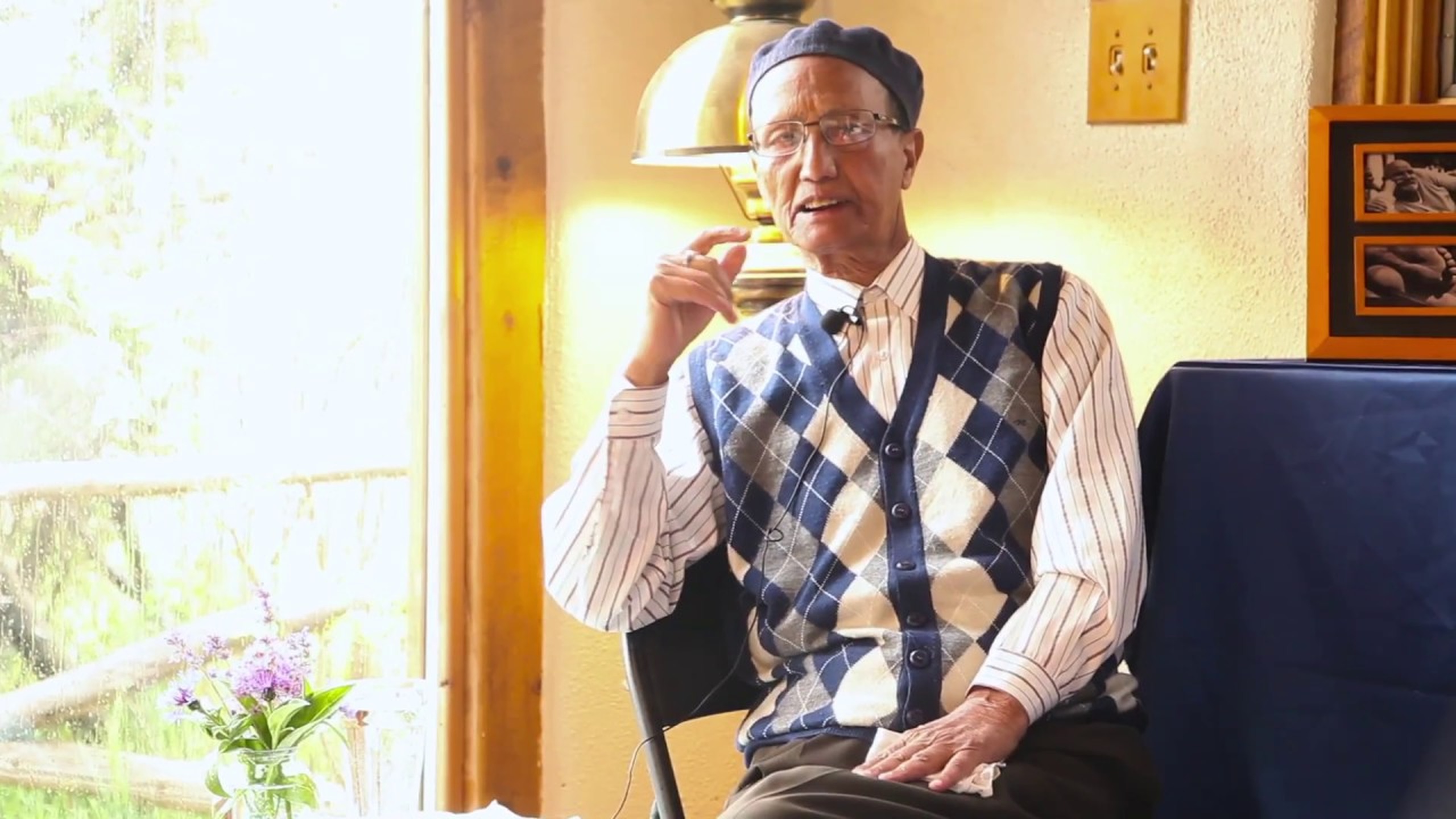
Among the devotees who knew Neem Karoli Baba the longest, one name comes up again and again in the stories of the Western satsang: K.K. Sah. Devotees remember him not as a distant scholar or a formal teacher, but as a man who had grown up at Maharajji’s feet — and who then spent his life opening the door for others to meet the same guru.
As told by devotees, K.K. was the friend who translated Maharajji’s words for Ram Dass on their very first meeting, the host who took a bewildered American professor into his Indian family home, and the guide who carried letters from young Western seekers to Maharajji at Kainchi. Without him, devotees say, the Neem Karoli Baba satsang in the West might never have taken the shape it did.
K.K. Sah at a Glance
| Detail | As told by devotees |
|---|---|
| Full name | Krishna Kumar Sah, known to all as “K.K.” |
| From | The Kumaon hills of northern India; lived in Nainital |
| First met Maharajji | As a small child (accounts differ on the exact age — see note below) |
| Known for | Translating for Ram Dass; hosting and guiding Western seekers; bhajan singing; Ramayana scholarship |
| Book | Deva Bumi: The Abode of the Gods in India |
| Work | Clerk in the municipal office in Nainital |
| Passed away | 14 January 2020, at his home in Nainital |
A Childhood in the Lap of Maharajji
K.K. grew up in the Kumaon hills, in the foothills of the Himalayas — a region devotees call Deva Bumi, the Land of the Gods. His family had lived among saints and sages for generations. His father, a police inspector in the days of the British Raj, travelled the remote Himalayan trails in his work and met great yogis of the region, including Sombari Baba, Hariakhan Baba, and Brahmachari Baba. Stories of these saints were part of K.K.’s childhood home.
As devotees tell it, K.K. met Maharajji when he was still a small child, and from then on he practically grew up in the guru’s presence. One fondly repeated story from his school days says that he would skip school to spend time with Maharajji — and that his teacher, himself a devotee, struck a deal with him: bring me darshan of Maharajji, and I will mark you present even when you are absent. When K.K. finally did turn up to class, the teacher is said to have joked that now that he was actually present, he would be marked absent.
As an adult, K.K. worked as a clerk in the municipal office in Nainital. Devotees recall that he would finish his day’s work in a couple of hours and then slip away to the temple to be with Maharajji — and that nobody dared to scold him for it, because everyone knew about his relationship with his guru.
Devotees also remember Maharajji giving K.K. a special blessing: that he would remain like a child forever. K.K. himself is said to have taken this with complete seriousness and joy — speaking to Maharajji with the fearless freedom of a child speaking to a parent, making demands out of love, and never standing on ceremony.
The Translator Who Became a Bridge
K.K.’s place in the story of the Western satsang begins in 1967, when Richard Alpert — the man who would become Ram Dass — first met Maharajji. As devotees tell it, K.K. translated Maharajji’s Hindi words for the American visitor. Then Maharajji told K.K. to take Ram Dass home. K.K. did more than that: he took Ram Dass into his home, his family, and his heart. The two men bonded instantly, and a friendship began that would last for the rest of their lives.
Before Ram Dass returned to America, Maharajji told him not to speak about the guru. Ram Dass kept the letter of that instruction — he never gave out Maharajji’s name or where to find him — but he did give K.K.’s address to a few Westerners. Among them were Jeff Kagel, who would become Krishna Das, and Jim Lytton, who would become Rameshwar Das. They wrote letters to K.K., asking permission to come and meet Maharajji.
What happened next is one of the best-loved stories about K.K. As devotees tell it, K.K. carried those letters to Maharajji at Kainchi, placed them on Maharajji’s bed, and was feeding him slices of apple when Maharajji asked what they were. Told they were letters from Ram Dass’s students who wanted to come and see him, Maharajji at first replied that he had nothing to do with these people and that they should be told not to come. K.K. put his head down and stopped feeding him the apple. After some back and forth, Maharajji gave in, saying, in effect, tell them what you want. Krishna Das later described this as K.K.’s seva: serving Maharajji by serving Ram Dass and his students, and refusing to stand aside from a service Maharajji himself had given him.
From then on, K.K. was far more than a translator. Devotees describe him as a living storehouse of bhakti tradition — someone who taught newcomers not only what Maharajji said, but how to be in the presence of such a being. He hosted countless Western visitors in his home over the years, welcoming them as family, with tea and biscuits at the very least. To him, devotees say, family was not about politeness but about closeness and intimacy: he would be offended if a guest asked for something formally instead of simply demanding it, as family does.
He also helped carry the Hanuman Chalisa to the West, giving Krishna Das and Rameshwar Das the help they needed to translate and understand it. Today the Chalisa is sung across the Western satsang — a transmission devotees trace back, in part, to K.K.’s guidance.
Scholar, Singer, and Storyteller
K.K. was a scholar of the Ramayana, and devotees remember him as the guiding light of the Ram Lila performances staged every year in his hometown of Nainital, tuning the actors into the right feeling for their roles. He was also, by many accounts, an exceptionally beautiful singer of bhajans and kirtan. Krishna Das called him the most beautiful bhajan singer he had ever heard, and said of him, “There’s nobody like KK. He’s somebody who’s completely turned to God, to love.”
His book, Deva Bumi: The Abode of the Gods in India, gathers the stories of the Kumaon region’s saints and sages — the spiritual landscape he had grown up hearing about from his father and experiencing first-hand. In it, devotees say, he passed on the love and wisdom of the siddhas of his homeland, including Sombari Baba, whose stories had previously lived only in the spoken memory of the people among whom he lived.
Later Years and Remembrance
After Maharajji left his body in 1973, K.K. devoted much of his time to Ram Dass and the Western satsang. He travelled to America to be with Ram Dass at Naropa, and in later years he visited the United States several times, including visits to Ram Dass in Maui. Devotees remember how hard every farewell was for him — his emotions, they say, were always right on the surface, whether he was parting from Ram Dass or from an ordinary visitor to his home.
His connection with the wider satsang also reached beyond India and America. In February 2006, he visited the Brindavon ashram in Ulm, Germany, at the invitation of Durgamayi Ma, staying for four weeks with her community. And on a visit to the Taos ashram in New Mexico during the early construction of its Hanuman temple, local devotees remember sitting with him near the kitchen for a few beautiful days, listening to his stories of his time with Maharajji.
One small habit of his became famous among his friends: at the end of his letters to Ram Dass, K.K. almost always drew a flower with the word “love” written in its root. When asked why, he explained that without love at the root, no flower can bloom.
K.K. Sah passed away at his home in Nainital on 14 January 2020 — only weeks after Ram Dass, his beloved guru brother, had left his body in December 2019. Those who knew him well were not surprised, devotees say: it felt as though he did not want to live on without his guru brother, and the duty Maharajji had given him — to take care of Ram Dass — was complete. He is remembered as a bhakti yogi, a Ramayana scholar, and a devoted source of wisdom who helped shape the Western satsang from its very first days.
Frequently Asked Questions
Who was K.K. Sah?
K.K. Sah (Krishna Kumar Sah) was one of Neem Karoli Baba’s eldest devotees, who knew Maharajji from childhood. He is best remembered as the translator and host who helped Ram Dass and the early Western seekers meet Maharajji, and as a bhajan singer, Ramayana scholar, and author.
How did K.K. Sah first meet Maharajji?
As told by devotees, he met Maharajji when he was still a small child, growing up in the Kumaon hills where his family lived among saints and sages. Different accounts give his exact age differently — one says five, another says six or seven — so this post simply says he was a small child.
What was his role for Ram Dass and the Western seekers?
When Ram Dass first met Maharajji in 1967, K.K. translated for him, and at Maharajji’s word he took Ram Dass into his own home and family. Later, when Western seekers wrote asking to meet Maharajji, K.K. carried their letters to Kainchi and welcomed the visitors himself, teaching them the ways of devotion and the meaning of satsang.
Did K.K. Sah write a book?
Yes. His book is Deva Bumi: The Abode of the Gods in India, about the saints and sages of the Kumaon region where he grew up, including Sombari Baba and the other great beings his family had known.
When did K.K. Sah pass away?
He passed away at his home in Nainital on 14 January 2020, only weeks after Ram Dass. The date is confirmed by the Ram Dass Foundation’s memorial and by Krishna Das’s own tribute published that same day.
Related Reading
- Disciples of Neem Karoli Baba
- Ram Dass: From Harvard Professor to Neem Karoli Baba’s Servant of God
- Krishna Das: The American Voice Who Carried Maharajji’s Kirtan to the World
- Bhagavan Das: The American Seeker Who Brought Ram Dass to Neem Karoli Baba
- Kainchi Dham: Neem Karoli Baba Ashram Guide
Disclaimer
This post shares devotional accounts of K.K. Sah as remembered and told by devotees of Neem Karoli Baba, especially the Western satsang that knew him personally. Dates and details follow the published devotee sources available, and where those sources differ, the difference is noted rather than smoothed over. Nothing here is presented as a verified historical record beyond what those accounts state.