Kainchi Dham darshan timings 2026 are one of the first things devotees search for before travelling to Neem Karoli Baba’s beloved Kainchi Dham in Uttarakhand. This guide brings together, in one place, what is commonly reported about opening hours, aarti, prasad, queues, the best time to visit, and the practical rules of the temple, so that you can plan a calm and respectful visit. Please read the important note at the start: temple timings can change with the season, festivals, weather, and decisions of the temple trust. This article is a devotee-run planning guide, not an official notice from the ashram. Always verify the current timings with the official trust sources, shreekainchimandirtrust.org or nkbashram.org, before you travel.
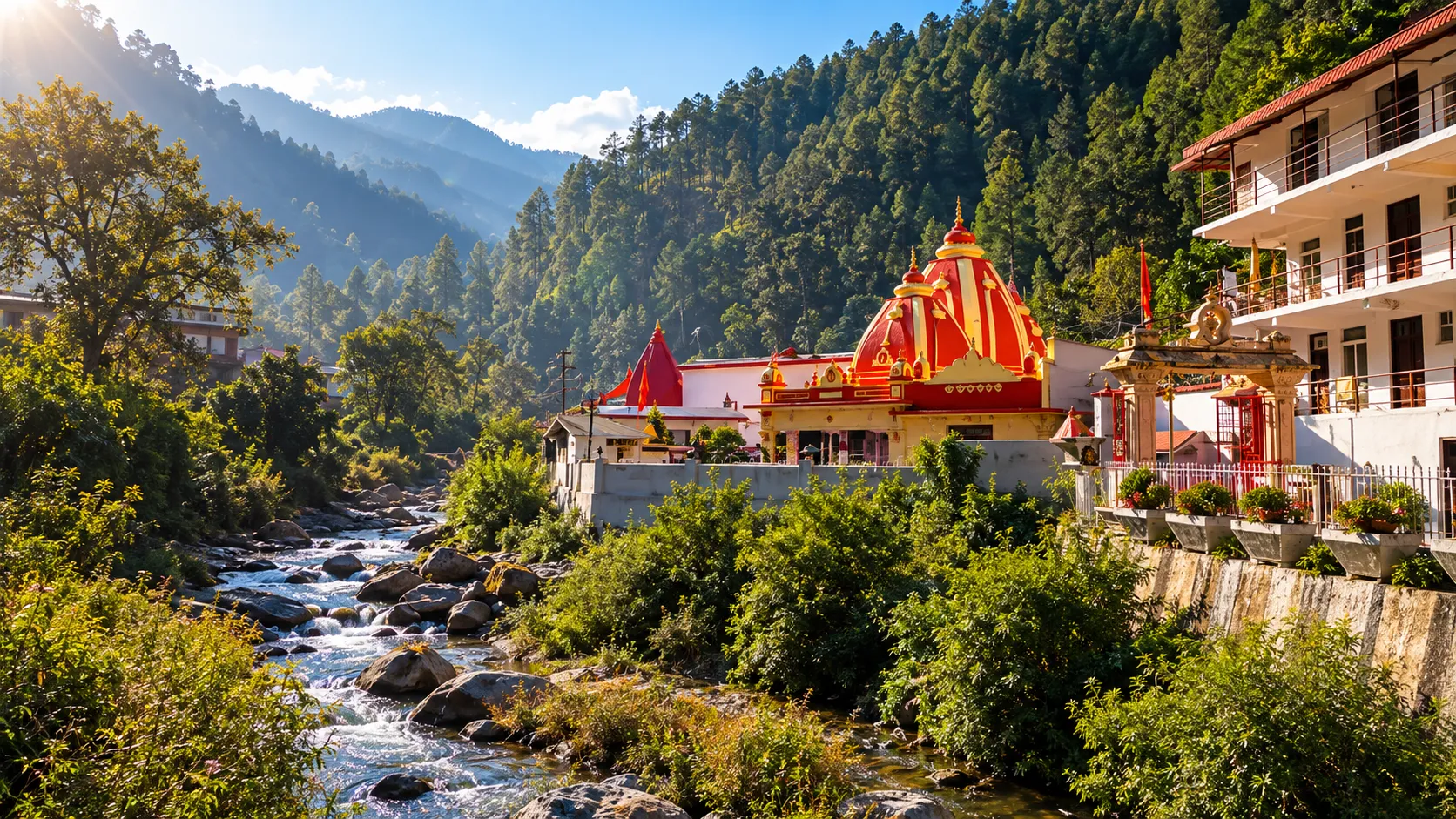
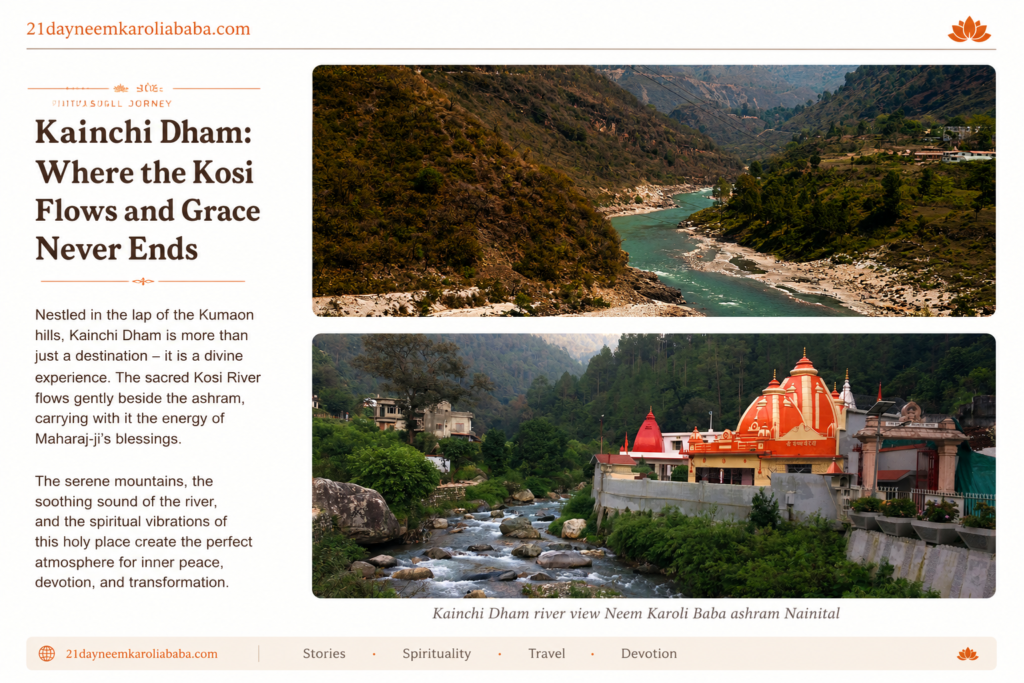
Kainchi Dham sits in a narrow, beautiful valley on the road between Bhowali and Almora, beside a river and surrounded by hills. It is the place most closely associated with Neem Karoli Baba, also lovingly called Maharaj Ji, and it draws devotees from across India and from many other countries. Some come for a short darshan on the way to Nainital or Almora. Others come for a longer stay, for silence, for bhajan, or simply to sit in the atmosphere of the temple. Whatever brings you, a little planning helps. If you arrive knowing when the temple is generally open, when aarti is commonly held, when the crowd is likely to be largest, and what is expected of visitors, you can spend your energy on darshan rather than on confusion at the gate.
.
Important Note: Read This Before You Plan Around Any Single Timing
No single timing should be treated as universal or permanent for Kainchi Dham. Timings vary by season and by source. Different travel websites, videos, and devotees report slightly different hours, and the temple itself may adjust its schedule for winter, for summer, for festivals, and for special occasions. That is normal for a living temple. The safest approach is to treat the timings in this guide as commonly reported patterns, not as a guaranteed timetable. Check the official trust sources, shreekainchimandirtrust.org or nkbashram.org, shortly before your visit, and confirm again locally when you reach Bhowali or Kainchi. If you are travelling a long distance, build flexibility into your day so that a change of an hour does not spoil your darshan. This site is devotee-run and is not the official ashram site, and nothing here should be read as an official announcement.
It also helps to understand why timings differ. In the hills, daylight changes a great deal between summer and winter. A temple that opens early in the long, bright days of June may open a little later on a cold, foggy January morning. Festival days bring much larger crowds and longer hours, while ordinary weekdays are quieter. The trust may also close the temple for a short period in the middle of the day. If you plan with these variations in mind, you will not be surprised.
Kainchi Dham at a Glance
| Item | What to know |
|---|---|
| Place | Kainchi Dham, near Bhowali, Nainital district, Uttarakhand |
| Main deity and focus | Hanuman Ji, with shrines associated with Neem Karoli Baba and other deities |
| Nearest town | Bhowali, a short drive away |
| Nearest railhead | Kathgodam, about 38 km away by road |
| Nearest airport | Pantnagar Airport, the nearest airport for most visitors |
| Best time to visit | March to June and September to November are commonly considered pleasant |
| Timings | Vary by season and source; verify with the official trust before visiting |
| Photography | Do not photograph inside the sanctum; follow signs and instructions |
The table above is a planning summary, not a timetable. Keep it with the disclaimer in mind: always confirm the current schedule before you travel.
Daily Darshan: The Commonly Reported Pattern
On an ordinary day, Kainchi Dham is commonly reported to open in the morning and to remain open through much of the day, with a break around midday. Many devotee accounts describe morning darshan beginning in the early morning hours, continuing through the late morning, followed by a closure for a few hours in the afternoon, and then reopening for evening darshan. Evening darshan is commonly described as continuing until early night. The exact opening and closing minutes differ from source to source, and they shift with the season, so this guide deliberately does not present one fixed clock time as the official rule for every day of the year.
What matters more than a single minute on the clock is the shape of the day. Morning is usually the best time for a quiet darshan. The air is fresh, the light in the valley is beautiful, and the crowd is often smaller than at midday. If you can reach Kainchi early, you will usually find a calmer atmosphere and more time to sit. Late morning brings more visitors, especially on weekends and holidays. The midday break, when it applies, is a good time to rest, to eat, or to walk quietly nearby rather than waiting at a closed gate. Evening brings a different mood, with aarti, bhajan, and the lamps of the temple, and many devotees find evening darshan deeply moving.
| Part of the day | Commonly reported pattern | Planning tip |
|---|---|---|
| Early morning | Temple commonly opens for morning darshan | Arrive early for the quietest darshan |
| Morning to late morning | Darshan continues; crowds build on weekends | Keep your visit simple and unhurried |
| Midday | A break or closure is commonly reported | Use this time to rest and eat |
| Afternoon to evening | Temple commonly reopens for evening darshan | Return in time for aarti |
| Evening | Aarti and evening darshan are commonly held | Stay for bhajan if you wish |
| Night | Temple commonly closes for the night | Do not plan a late-night arrival |
Again, treat this table as a pattern, not as a promise. If a particular day matters to you, for example because you have a train to catch or a long drive ahead, verify the current hours before you leave your hotel.
Aarti at Kainchi Dham: What Devotees Commonly Report
Aarti is the heart of the day for many visitors. At Kainchi Dham, aarti is commonly reported in the morning and again in the evening. Morning aarti is often described as taking place in the early morning, and evening aarti is often described as taking place around sunset or in the early evening. The exact minutes vary by season, because sunset itself moves through the year, and they may vary by festival and by the temple’s own schedule. This guide does not present one exact aarti time as a verified fact. If attending aarti is the main purpose of your visit, confirm the current aarti time with the official trust or locally on the day before, and arrive well before the expected time.
During aarti, the temple is at its most beautiful and its most crowded. The sound of bells, the chanting, the lamps, and the collective focus of the devotees create an atmosphere that many people remember for years. It is also a time to be especially mindful. Keep your phone silent and put away. Do not push forward for a better view. If you are standing at the back, you are still part of the aarti. Follow the instructions of the temple staff and volunteers, keep the passages clear, and let elderly devotees and families with small children find space. If you are carrying offerings, keep them simple and follow the temple’s guidance about what is accepted.
Some devotees like to attend both morning and evening aarti on the same day. That can be a beautiful way to spend a day at Kainchi, with quiet time in between. Others prefer one aarti and a longer period of sitting in the temple complex. There is no single right way. Choose what suits your health, your travel plan, and your state of mind. If you are unwell, tired, or travelling with young children, do not exhaust yourself trying to attend everything. A short, peaceful darshan is worth more than a long, strained one.
Prasad at Kainchi Dham
Prasad at Kainchi Dham is remembered by devotees with great love. Neem Karoli Baba is often remembered for his generosity with food, and the tradition of feeding devotees continues at Kainchi. Prasad is commonly distributed at the temple, and on many days a simple meal or prasad is offered to visitors. The exact form of prasad, the timing of distribution, and the arrangements for sitting and eating can vary with the day, the crowd, and the temple’s schedule. Do not arrive with a fixed expectation of a particular dish or a particular hour. Accept what is offered with gratitude, eat quietly, and do not waste food.
A few practical points help. Wash your hands before accepting prasad. If you have dietary restrictions, allergies, or a medical condition, ask politely about what is being served, or carry your own simple food as a backup. If you are offered prasad to take home, accept only what you can carry and keep fresh. Do not ask for extra prasad meant for other devotees. If you wish to offer something, ask at the temple what is appropriate and follow the guidance you are given. The spirit of prasad is sharing, not shopping.
On festival days, especially the large bhandara associated with the temple’s foundation day in mid-June, prasad arrangements are on a much larger scale and crowds are much larger. If you plan to visit on such a day, arrive early, be prepared for long queues, and follow the volunteers’ directions. The experience can be joyful, but it is not the best day for a quiet first visit. Many first-time visitors prefer an ordinary weekday, when the temple is calmer and prasad distribution is simpler.
How Long Does Darshan Take?
On an ordinary weekday, darshan at Kainchi Dham is often a matter of a short wait followed by a brief time before the deities, with the option to sit longer in the temple complex. On weekends, holidays, and festival days, the wait can be much longer. The queue system, the number of visitors, and the time of day all make a difference. There is no fixed duration that applies to every visit, and you should not plan a tight onward journey immediately after your expected darshan time. Allow at least a few hours for the visit, including travel to and from the temple, waiting, darshan, prasad, and a short period of sitting quietly.
If you are travelling with elderly family members, with people who have difficulty standing, or with small children, plan extra time and carry water. Let the temple staff know if someone in your group needs assistance, and follow their guidance. Do not try to jump the queue or to use influence to go ahead of others. The queue is part of the visit, and many devotees use the waiting time for silent naam jap, for remembering Maharaj Ji, or simply for watching the valley.
Best Days and Best Seasons to Visit
The best time to visit Kainchi Dham depends on what you are looking for. March to June is commonly described as a pleasant and popular season, with longer days and generally clear weather, though it can be crowded, especially during school holidays and around the mid-June bhandara. September to November is also commonly described as pleasant, with fresh air after the rains and clear views of the hills. Winter, from December to February, can be cold, and mornings can be foggy, but the temple is quieter, and a winter visit can be deeply peaceful if you dress warmly. The monsoon months bring rain, landslides in the hills, and travel delays, so extra caution is needed if you travel then.
Weekdays are usually quieter than weekends. Early mornings are usually quieter than late mornings. If your schedule allows, choose a weekday morning for your first visit. You will have more space, more silence, and a gentler introduction to the temple. If you can only come on a weekend or a festival day, come with patience. Expect crowds, expect queues, and do not measure the visit by how quickly you finished. The crowd is also part of the devotion of the place.
Rules and Etiquette for a Respectful Visit
Kainchi Dham is a place of worship, not a tourist attraction in the ordinary sense. The rules below are commonly observed at the temple and in many Hindu temples in India. They are offered as general guidance; always follow the signs and instructions at the temple itself, which take precedence.
- Dress modestly. Cover your shoulders and knees. Avoid loud or revealing clothing.
- Do not take photographs inside the sanctum. Photography rules may apply elsewhere in the complex; follow the signs.
- Keep your phone silent. Do not take calls inside the temple.
- Remove footwear where required and keep the temple clean.
- Maintain silence or speak softly inside the temple. Do not shout or argue.
- Do not touch the deities or enter restricted areas.
- Follow the queue. Do not push, and do not ask for special treatment.
- Do not litter. Carry your waste back out with you.
- Be kind to fellow devotees, to staff, to volunteers, and to local residents.
- If you are unwell, rest. Do not insist on a long visit at the cost of your health.
These rules are not meant to make the visit formal or anxious. They are meant to protect the atmosphere of the temple for everyone. When every visitor keeps a little silence and a little patience, the whole place feels different.
What to Carry for Your Visit
Carry light. A small bag with water, a light shawl or jacket, any medicines you need, and a small amount of cash is usually enough. The weather in the hills can change quickly, so a light rain layer is useful in the monsoon and a warm layer is essential in winter. Wear comfortable footwear that is easy to remove, because you will need to take it off in parts of the temple. Avoid carrying large bags, valuables, or anything you would be unhappy to leave in a vehicle or a cloakroom. Keep your identification with you, and keep your phone charged, but use it sparingly inside the temple.
If you are travelling with children, carry water, a light snack, and warm clothing. Explain the temple rules to them gently before you arrive, so that they know what to expect. If you are travelling with elderly parents, carry their medicines, a light stool or support if they need it, and a plan for rest. Do not rush them. The temple is not going anywhere, and a slow visit is a good visit.
Why do different websites show different timings?
If you have checked three or four websites, you may have noticed that each one gives a slightly different time — one says the morning starts at 6:30, another says 7:00, one says the midday closure is 12:00-2:00, another says 12:00-4:00. There is a simple reason: the Trust publishes no fixed official schedule, so each site writes from its own experience or local information.
Timings shown by some popular guides (approximate — verify before you travel)
| Source | Morning | Midday closure | Evening / aarti |
|---|---|---|---|
| kaincidhamhomestay.in | 6:30 AM-12:00 PM | 12:00-4:00 PM | Evening session 4:00-7:00 PM; morning aarti about 7:00 AM, evening aarti about 6:30 PM |
| kainchidhamstays.com | Gates open 6:30 AM; Kakad aarti 7:00-7:30 AM | 12:00-2:00 PM | Sandhya aarti 6:00-6:45 PM; gates close 7:00 PM (winter) / 7:30 PM (summer) |
| chikucab.com | Summer 6:00 AM-7:00 PM; winter 7:00 AM-6:00 PM | Not stated | Morning aarti 7:00 AM, evening aarti 6:45 PM; Tuesday kirtan 7:00-9:00 PM |
That is why the safest approach is to check the Trust website (shreekainchimandirtrust.org) a day before you travel, or ask locally. Treat every timing on this page as commonly reported, not official.
Frequently Asked Questions
What are the Kainchi Dham darshan timings in 2026?
Kainchi Dham is commonly reported to be open for morning darshan and again for evening darshan, with a midday break, but exact times vary by season and source. This guide does not present one fixed timing as universal. Verify the current timings with the official trust sources, shreekainchimandirtrust.org or nkbashram.org, before your visit.
When is aarti held at Kainchi Dham?
Aarti is commonly reported in the morning and again in the evening. The exact times vary with the season and the temple’s schedule, so confirm the current aarti time locally or through the official trust before your visit, and arrive early.
Is prasad available at Kainchi Dham?
Prasad is commonly distributed at the temple, and a simple meal or prasad is often offered to visitors. The form and timing of prasad can vary with the day and the crowd. Accept what is offered with gratitude, and do not waste food.
Is Kainchi Dham open every day?
The temple is generally open to devotees on most days, but hours and arrangements can change for festivals, weather, and temple decisions. Check before a special trip, especially in the monsoon and on major festival days.
Related Reading
- The Establishment of Kainchi Dham: Baba Neem Karoli’s First Arrival
- Neem Karoli Baba Mandir Kahan Hai? Kainchi Dham, Vrindavan, Neem Karoli Village and More
- Neem Karoli Baba’s Miracles: The Stories That Still Draw Thousands to Kainchi Dham
Disclaimer
This article is a devotee-run planning guide, not an official notice from the Kainchi Dham temple or its trust. This site is devotee-run and is not the official ashram site. Timings, aarti hours, prasad arrangements, and temple rules can change at any time. They vary by season, festival, weather, and the decisions of the temple trust. Verify current information with the official trust sources, shreekainchimandirtrust.org or nkbashram.org, before visiting. Do not rely on any single timing in this guide as a guarantee. Travel in the hills carries its own risks, including weather and road conditions; plan carefully, travel safely, and follow local guidance.